
Hover to zoom
The Story
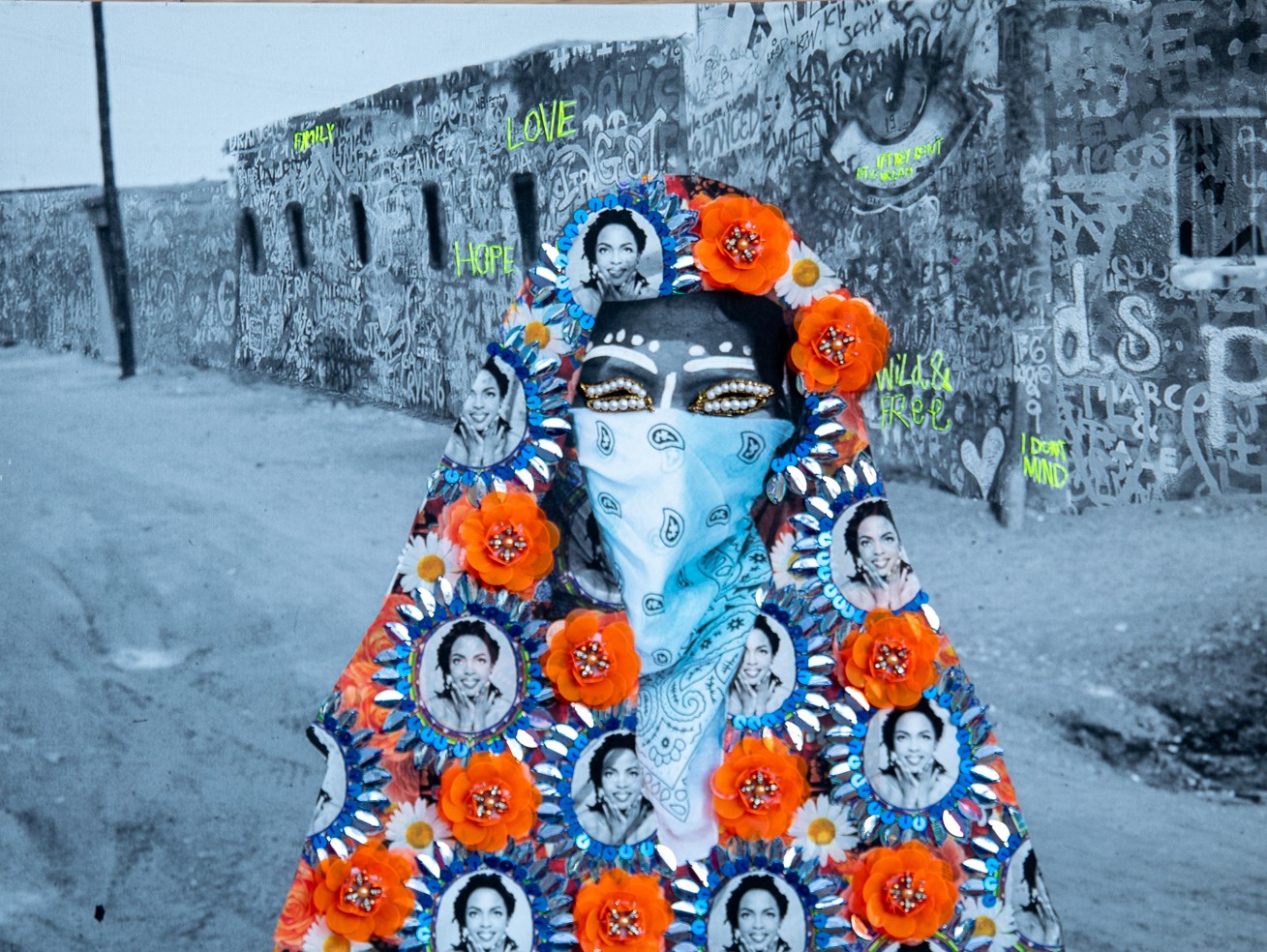
Haboba is derived from Arabic and stands for grandma, used notably in Sudanese lingo. She is the face of wisdom, enhanced by the symbolic embroidered pattern of Lauryn Hill, a renowned singer from the early 1990s. As the frontwoman of The Fugees hip-hop group, she is credited for breaking barriers for female rappers at a time when hip-hop/rap exploded to become the most popular genre of music.
This piece is an ode to the elderly. Elderly women are the backbones of their families. Grandmothers and great-grandmothers throughout the generations are often at home, not making many public appearances. They tend to the family behind closed doors, represented here through the bandana in traditional paisley pattern covering the face of Haboba, central element of the piece. This artwork is meant to honour these women, the work they do, the unconditional love they provide — the perfect illustration of the strong link between old and new, tradition and modernity.
The artist has her own unique approach to the traditional art of embroidery that she infuses with modern elements and a quirky touch. Azaïdé sincerely believes that the embroidered garments protect her female characters from troubles and give them the power to show their true self and shine brighter.
Azaïdé's unique approach infuses the traditional art of embroidery with modern elements and a quirky touch. She believes the embroidered garments protect her female characters and give them the power to shine brighter.